
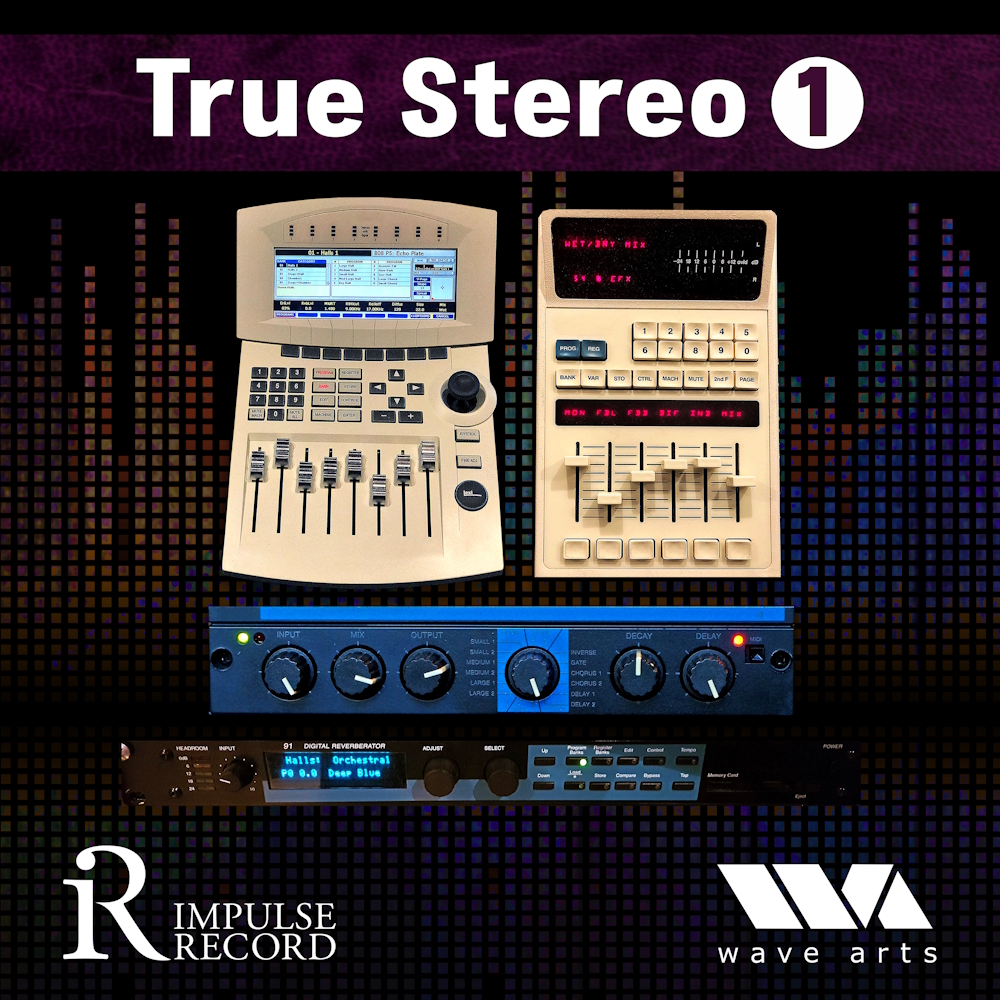
This Library Contains: 193 IRs over 700 Megs and Contains
960L – 34 responses, 85M
480L – 30 responses, 88M
PC-91 – 63 responses, 225M
LXP-1 – 66 responses, 304M
total: 193 responses, 702M
960L was released in 2000 with a frequency response of 20Hz – 40kHz. The 960L was the 480L on steroids. Very cinematic oriented with four stereo pairs of 24 bit/96kHz AES/EBU Digital I/O. It was huge then and still is.
480L was released in 1986 and quickly became “the unit” to have. Of course it costs a few bucks too. It truly was the ultimate of studio and engineer’s choice reverb to use. It’s iconic algorithms can be heard on numerous 80s and 90s records – and really beyond, including today.
PC- 91 is one of the later PC- units designed and built in the PC- class with superb reverb. The original unit consists of 9 banks of 50 presets for a total of 450 presets. (not all included in this library) The frequency response of this unit is 10Hz – 20kHz. Sampling Frequency: 48 kHz
LXP-1 Has 16 reverb presets and was designed in the 1990s. A half rack unit and was affordable at the time. Prior releases included many of the iconic DSP units released by this renown company. The company eventually being sold, still maintains a huge presence in the recording industry.
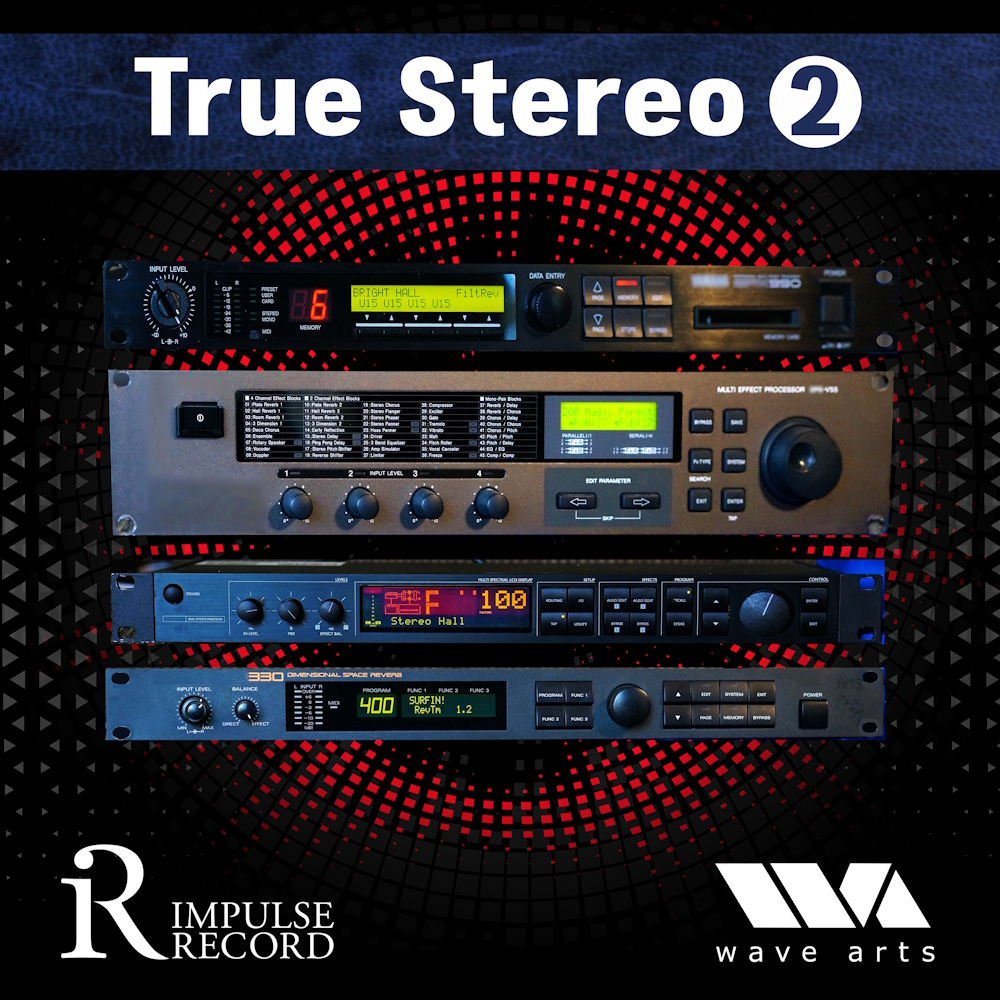
This Library Contains: 398 IRs over 1.380 Gig and Includes
SR–330 – 137 responses, 490M
DP–V55 – 85 responses, 291M
SP–990 – 106 responses, 351M
ONE – 70 responses, 248M
Total: 398 responses, 1.380Gig
SR- 330 came out in 1993 and had emulations of some of the classic gear such as the 140 and 250 along with a number of others and a good variation of algorithms. While this unit came out in 44.1 16 bit, it really sounded quite good and for it’s price tag, could keep up with units much costlier. This unit uses a RSS technology incorporating more of a “three dimensional” reverb.
DP- v55 was released around 1996 and had two models to choose from. The M series included a front panel mic/line jack. This unit included a four channel processor.
SP- 990 came out in the mid 90s. Had a 44.1 sampling frequency and a frequency response between 20Hz -20kHz. 80 preset memory locations 100 internal User memory locations
ONE the original unit came with 200 factory presets and stored hundreds of personal favorites. The ability to extend or decrease reverb size with early reflections and different room characteristics made this a very versatile tool for the end user.
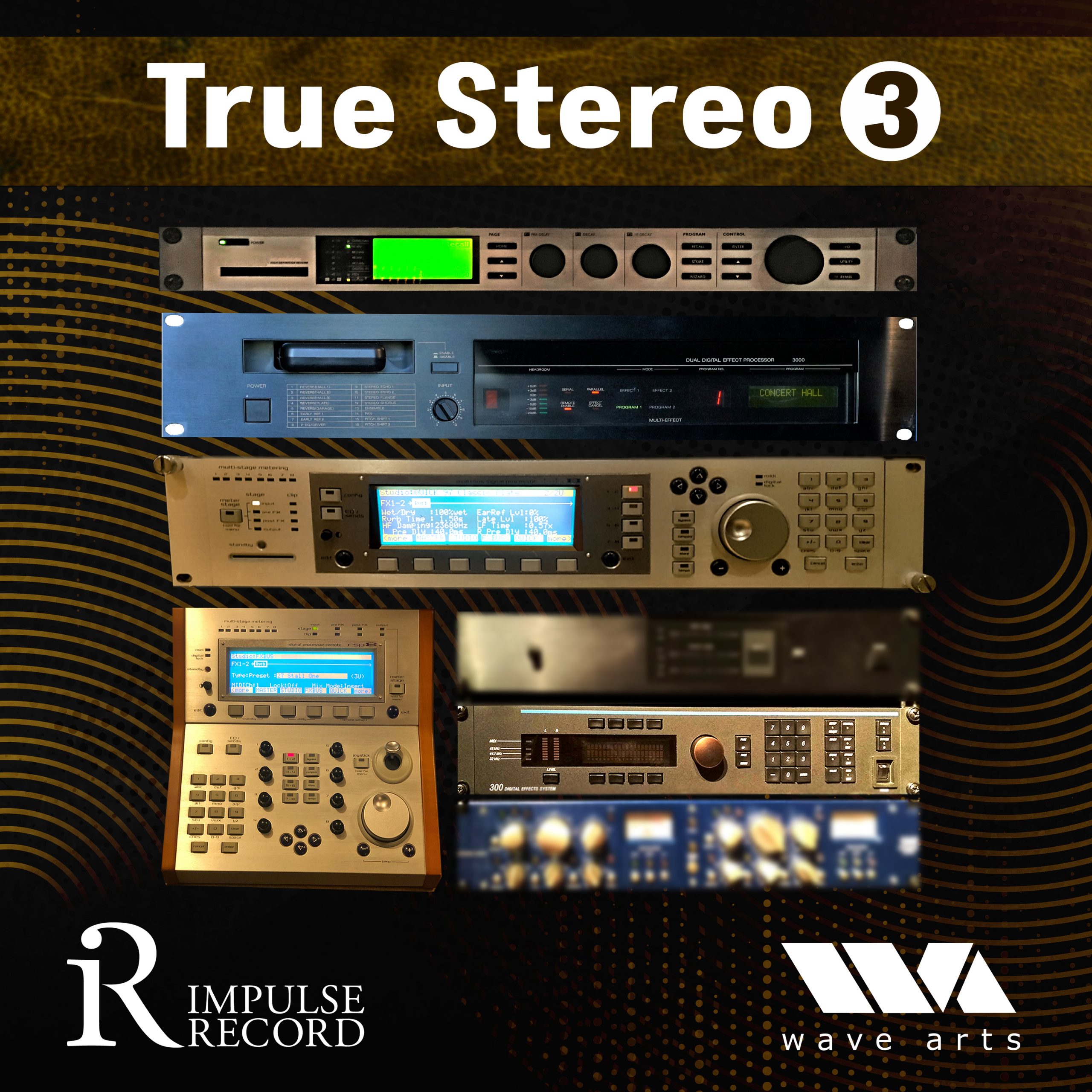
This Library Contains: 86 IRs over 308 Megs and Includes
L300 – 31 responses, 86M
T4000 (Bonus) – 5 responses, 22M
K8 – 23 responses, 78M
D3000 – 27 responses, 122M
Total: 86 responses, 308M
L300 – Released in 1989 – 18 bit, with a sampling frequency of 48k and frequency response between 10Hz – 21.5 kHz, was an advance of Lexicon from many units that preceded it. Beautiful stereo imaging and lush dense reverbs, gave this unit the same iconic sound of its predecessors that would be a favorite of many at the time of release.
T4000 – the 4000 came out after the 5000 and 6000 using many of the same True Stereo reverbs, in those units, that the 5000 and 6000 units were known for. Gorgeous spaces from very small to large are incredibly realistic. A true competitor in the market and still is today. Designed with 24 bit AD/DA converters and 44.1 to 96kHz Sample Rates.
D3000 – released in 1987 with a 16 bit/44.1 sampling frequency, giving this unit a frequency response of 20Hz to 20kHz. This was a mid level reverb unit that was acquired by many who couldn’t afford the iconic names and units of the day. Still has some very nice sounds, with these units found in many studios even today.
K8 – released in 2002 in 24 bit, with a 128x oversampling, gave this unit a sampling frequency of 44.1/48kHz. Frequency response between 20Hz and 20kHz was the production standard. This unit never got the attention and fanfare that many of the other manufacturers of the day, but sounds simply amazing. Wonderful pallets of spaces of all kinds, make this unit really stand out.
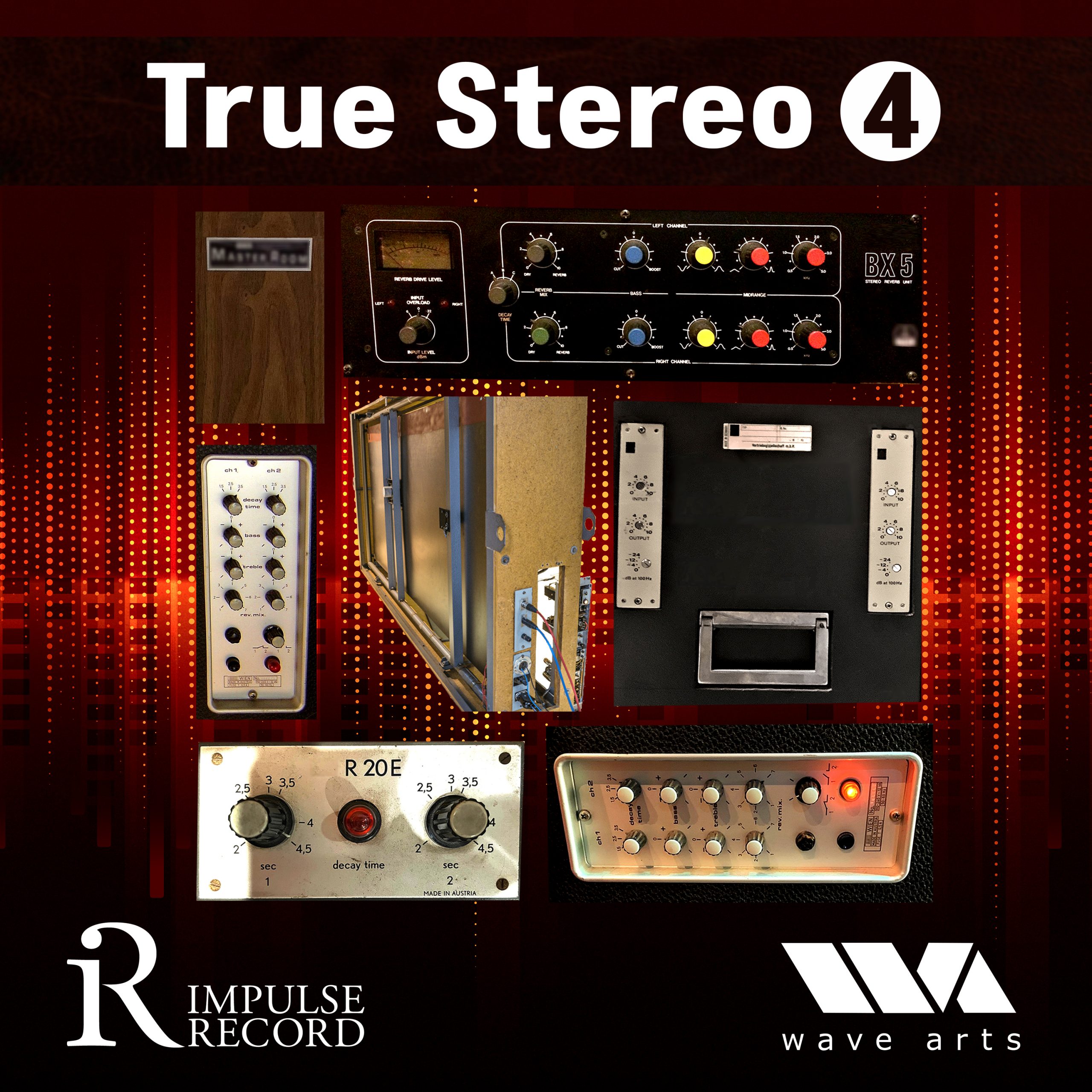
This Library Contains: 54 IRs over 200 Megs and Includes
German 140 (True Stereo Simulation) 6 responses, 25M German 240 5 responses, 18M Austrian BX5 6 responses, 25M
Austrian BX10 16 responses, 58M
Austrian BX15 6 responses, 32M
Austrian BX20 10 responses, 43M
MRoom Spring 5 responses, 10M
Total: 54 responses, 210M
German 140 – The German 140 was always a mono in and stereo out box, but we’ve “imagined” what a True Stereo German 140 would sound like in True Stereo. Using the magic of the digital domain, we have introduced one of the most iconic plates and manufacturers, in our True Stereo catalogue. True to it’s well established sound, this True Stereo German 140 will fill that void in that convolution space.
German 240 – The German 240 was the next step and evolution from their original 140 plate that was very large in size. In comparison, the 240 was 24″ X 24″ The magic of the 240 was in the Reverb Foil which used an electroplated gold foil of great purity (24 carat “coin gold”) with a thickness similar to aluminum foil. Even with the advances of size, the German 240 was still very costly at the time and generally had a darker sound.
MRoom Spring – long spring reverb, designed and sounding similar to the long British Spring. This spring was in a class reminiscent to the Australian BX series, many saying it fell short and others holding on to their vintage unit because they love the sound so much. Either way, it offers a unique spring sound, that can be applied in productions that warrant that “certain” vintage spring sound.
BX5 – “Torsional Transmission Line” spring reverb. Three selectable reverb decay settings – “A” smoother reminiscent somewhat of a plate reverb sound for a spring; “B” longer decay more “boingy-ness” and “C” – longest decay and most “boing.” A very bright sounding spring.
BX10 – was billed as “the ultimate “natural sound” portable reverberation unit. Frequency range 20 – 12000Hz. Frequency response 20 – 8000Hz. Three different reverb times 1.5 second, 2.5 second and 3.5 second.
BX15 – The BX-15 was designed for use in smaller studios. Two mechanically and also electrically separate, isolated channels, made it possible to handle two independent signal sources with different decay times (1.5 – 3.5 seconds). This unit like the others had treble and bass settings, along with reverb intensity.
BX20 – The AKG BX20 reverberation unit was produced in the late 1960s, and is perhaps the most popular spring reverb units made for good reason. They are longer springs and warmer. Truly one of the closest springs that emulates a plate. This unit gives depth and warmth that many DSPs have a harder time emulating.
The True Stereo Libraries contains samples of some of the finest digital reverbs ever created. As with our traditional library content, all of these vintage DSP reverb files, are all recorded at 24-bits, 96 kHz.
These preset names are derived from the original unit presets. Like our stereo Convology XT library, Impulse Record worked with studios from around the world and partnered with those studios with a track record of quality, with understanding and knowledge of not only convolution reverb, but knowledge that we could use to incorporate within a first class True Stereo Library. As with our traditional Convology XT libraries, most of these units sampled have been used with many legendary artists.
While some go to extreme and in some cases obscene file sizes and sampling rates, only to bog down end user resources and RAM, we have maintained the ratio between undeniable quality and incredible efficiency. That’s not easy to do with True Stereo as the files are really double in size.
As Convology XT continues to grow, one of the areas we have been focusing on has been True Stereo. In large part, this is because of a large and ever increasing user base that has been asking for it – and for good reason. It’s an amazing library! The True Stereo files captured in this library are more than stunning, they’re some of the best, if not the best, you’ll ever work with!